How To Play
Objective:
To get all your stones into the winning triangle and your Jim into the win square.
Key terms:
Reference Images:
1. Stones: these are the movable playing pieces.

2. Jims: These stones can only move diagonally along the board and are the only stones to be able to occupy the win squares. Your can identify a Jim by its white outline.
3. Tiles: these are the areas where a stone can be placed on the board. There are 76 tiles in total. The triangles on the side are also considered full tiles.
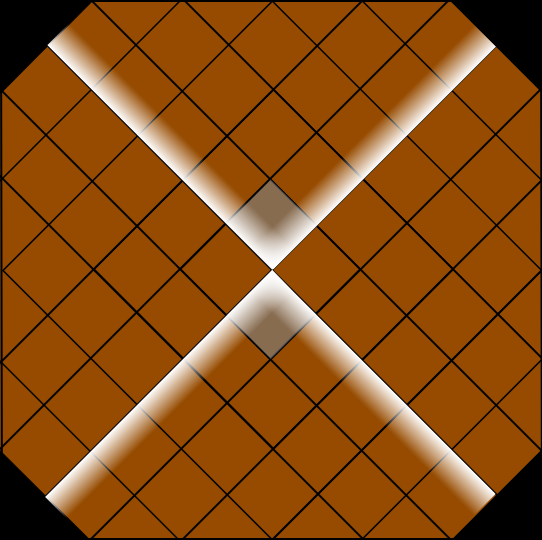
4. Win Square: a win square is the square that the Jim must be on to win the game. No stones can be placed on this square throughout the game and the Jim cannot go back into it after it has left.
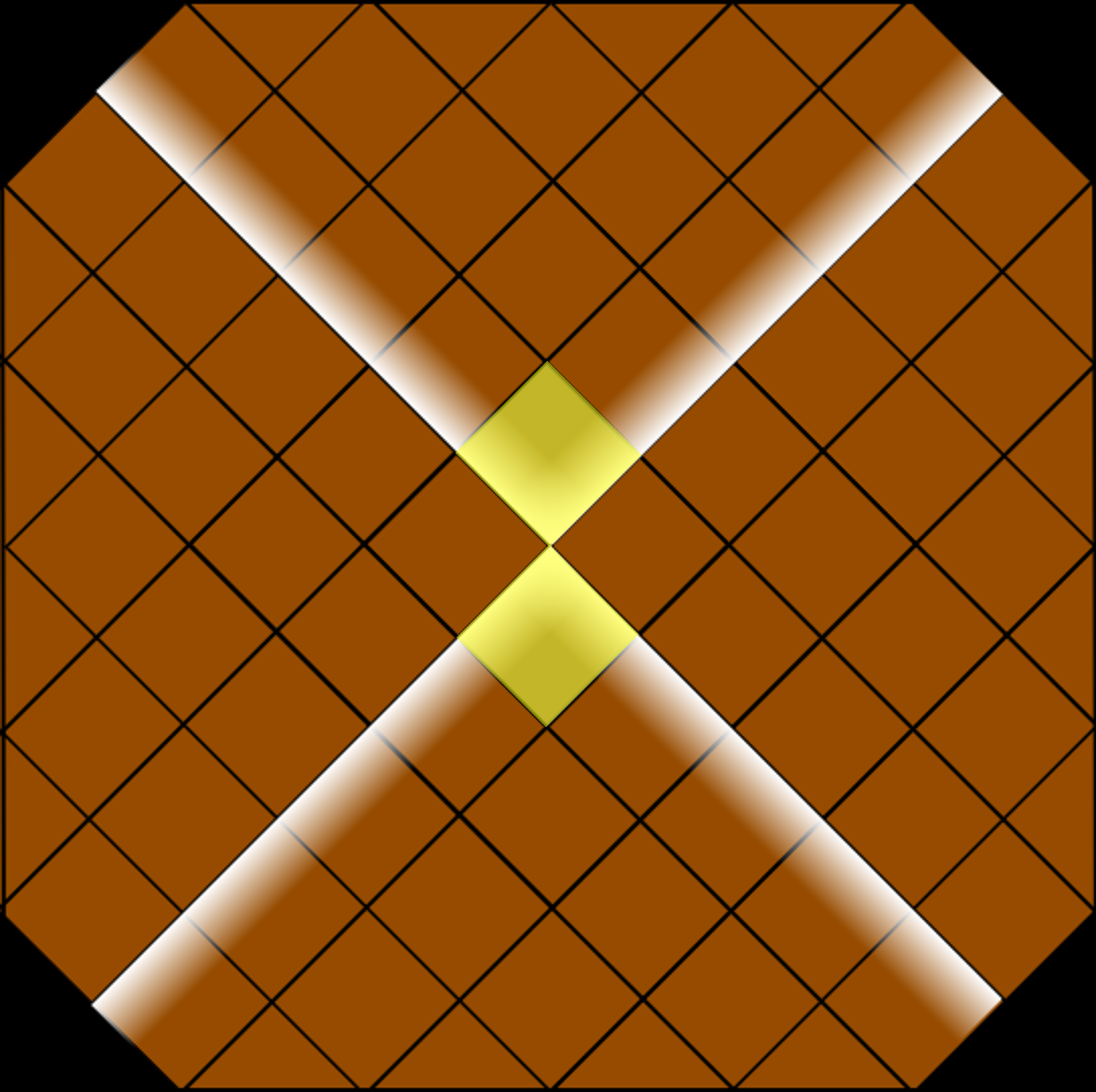
5. Winning Triangle: All of your stones must be placed in your opponents Winning Triangle to win the game. Winning triangles are highlighted in white.

8. Stone Movement: to move a stone you must shift it to the end of its row, or up against another piece already in that row. Stones cannot move diagonally.
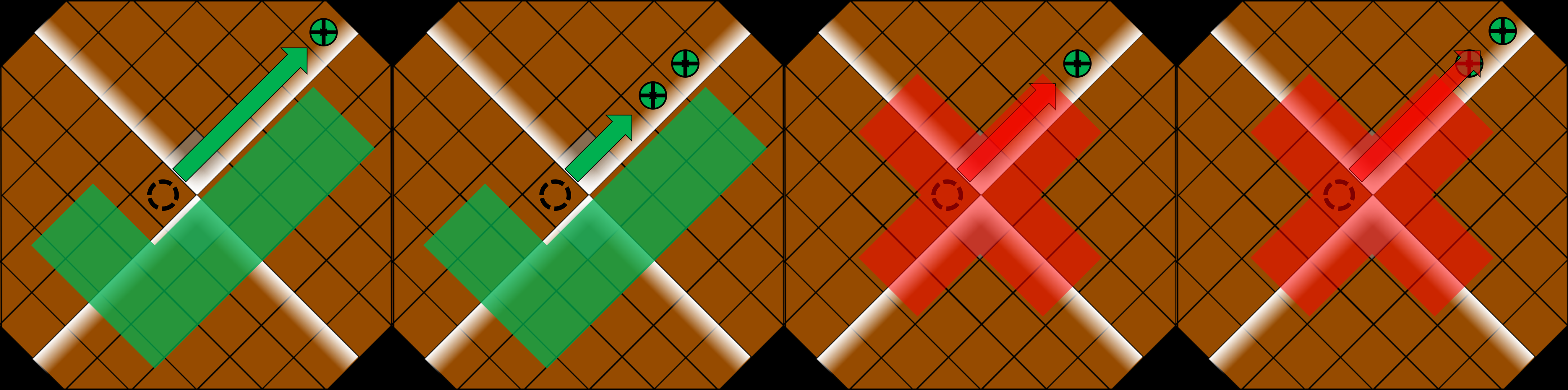
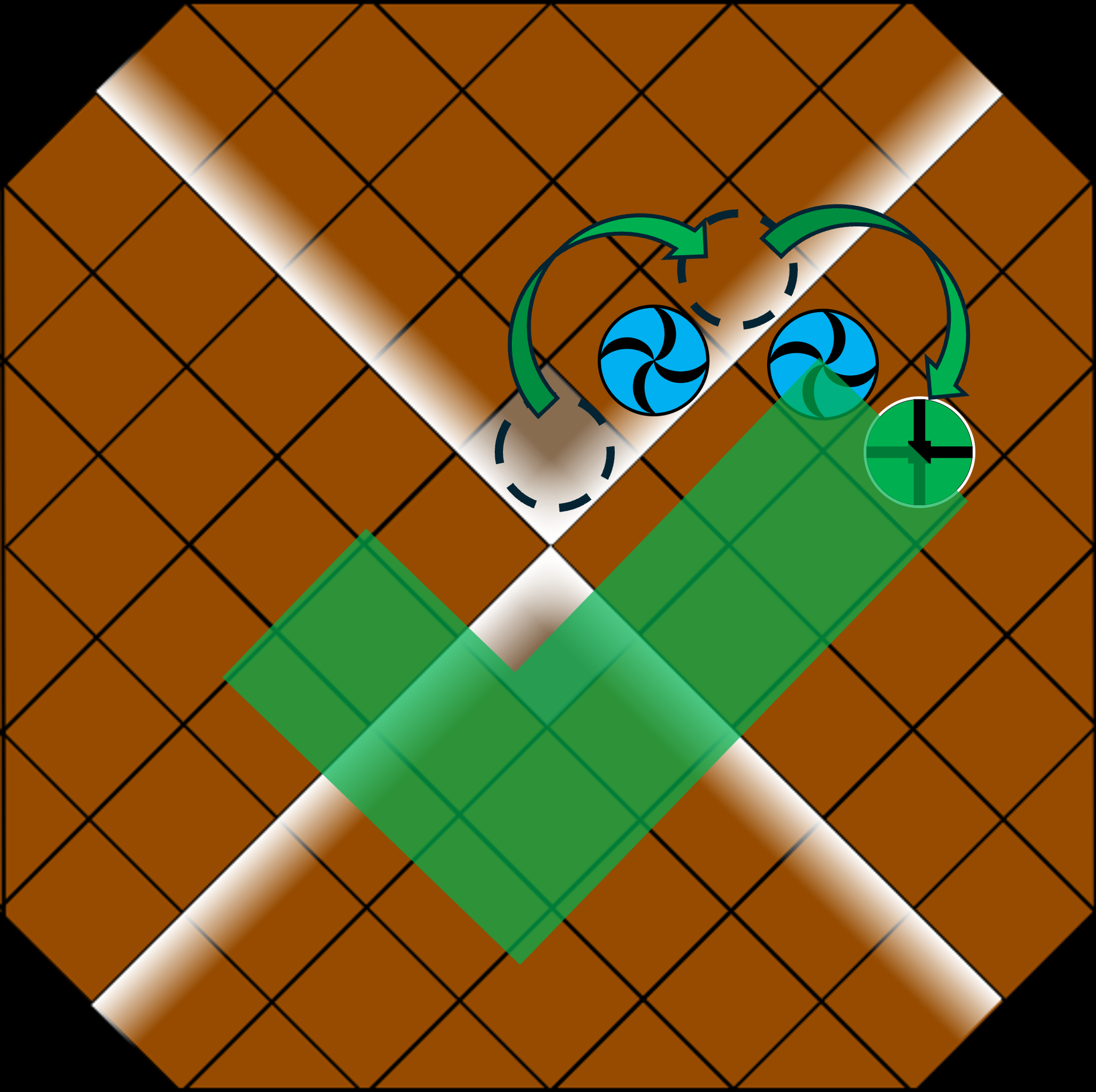
9. Jim Movement: Jims also follow the same rules as stones in that they must travel until they hit another piece or wall. However Jims movement differs in that they must move diagonally.
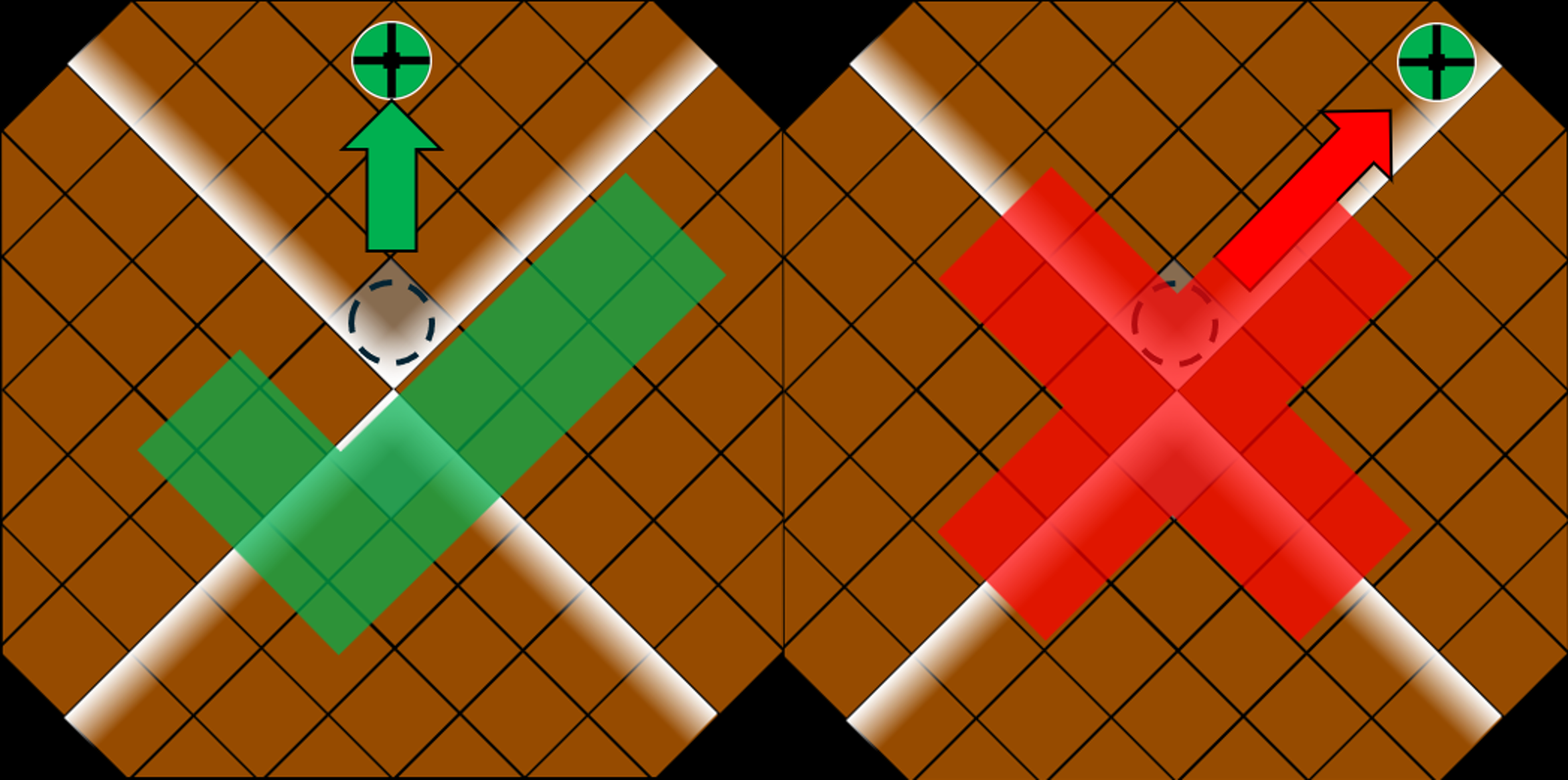
10. Jim Special Movements: Jims also have the option of jumping a piece. This can occur when they are positioned directly adjacent to the piece they would like to jump. Jims can jump multiple times in one move and along different angles including rows and diagonals so long as they land adjacent to the next piece they want to jump.
Basic Movements:
To move, click on the piece you would like to move, and then click on the highlighted square you would like to move it to. You can also drag your piece of choice to a highlighted tile. You may only move once per turn.
To Win:
To win the game, you must move your pieces into the opposite Winning Triangle and have you Jim in the Winning Square before your opponent.
Other rules:
1. The Jim is not allowed to jump the other Jim or slide into the other Jim when entering the Win Square.
2. The Jim must be the first piece moved.
3. A draw is called after 10 movements of the Jim without another piece being moved or if there is three move repetitions.
4. Once the Jim has exited the target square on the first move it may only enter the other target square. The original target square must remain vacant.
5. If a Jim jumps an oponents piece of any type then that piece is removed from the board and placed back on one of the starting squares before the next move beings.